
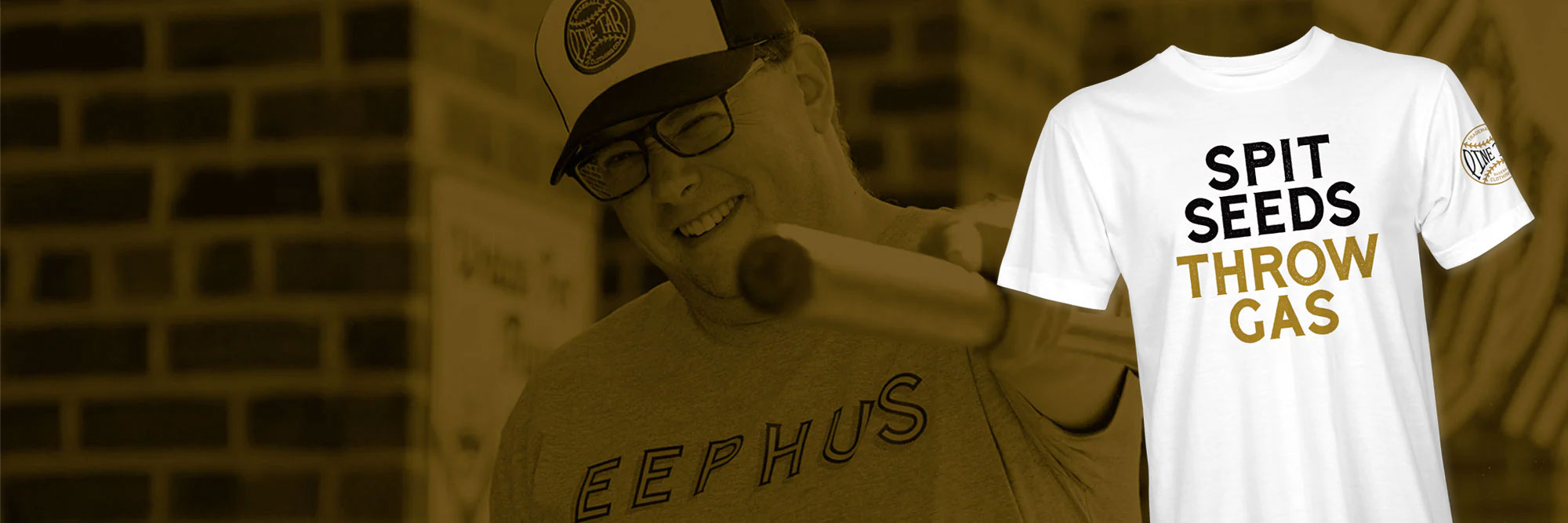
Spit Seeds, Throw Gas: Why Sunflower Seeds Are Baseball’s Unofficial Uniform
If you’ve ever stepped between the chalk lines without a handful of sunflower seeds, you probably felt a little…naked. There’s your hat, your glove, your jersey—and then there are your seeds, this tiny but essential part of your baseball uniform.
For a lot of us, sunflower seeds weren’t just a snack; they were part ritual, part stress relief, and part connection to the game itself. From riding the pine in high school to coaching your kids on dusty community diamonds, seeds have a way of sticking around as long as the game does.
From Reggie Jackson To The Local Concession Stand
Most of us never questioned why seeds and baseball go together—we just grabbed a bag at the convenience store and headed to the field. But the tradition goes back decades. By the 1960s and 70s, sunflower seeds were already becoming a dugout staple, and of all people, Reggie Jackson was one of the guys who helped normalize them as part of a player’s routine.
They also became a kind of “cleaner” alternative to chewing tobacco. Anyone who grew up watching baseball in the 80s and 90s remembers how common chew was on TV and in the dugout, but over time seeds became the safer, more acceptable thing to have bulging in your lip. The Sandlot even gave us the ultimate cautionary tale: load up on chaw, ride the Tilt-A-Whirl, and you’re decorating the midway in a Technicolor nightmare. Seeds feel a lot friendlier after that.
How Seeds Shape Dugout Culture
Ask any longtime player or coach and they’ll tell you: seeds are as much about the mental side of the game as the salty crunch.
-
They give anxious minds something to do between pitches, innings, or coaching decisions.
-
They become a rhythm—crack, chew, spit—that syncs with the pace of the game.
-
They mark time: early-season cold, late-July scorchers, playoff nights under the lights.
Everyone has their own style. There’s the “one-at-a-time surgeon” who delicately cracks each seed and plucks out the kernel by hand. Then there’s the “chipmunk,” stuffing a full handful in one side of the mouth, splitting shells with their tongue like a machine, and spitting a steady stream of shells onto the warning track. Most players proudly fall into one camp or the other.
Of course, you pay a price. After nine innings of nonstop chewing, your tongue feels like beef jerky, your mouth is wrecked with salt, and you can’t drink enough water to catch up. But you still reach for the bag the next game.
Dirt Fields, Turf Fields, And The New Seed Rules
The romance of seeds is tied to dirt—real dirt. On a good old-fashioned infield, spitting shells at your feet is just part of the landscape.
But in places like Minnesota, turf fields are popping up everywhere, and turf and seeds do not mix. Shells get trapped in the infill, gum up the surface, and quickly turn a pristine field into a maintenance headache. That’s why most turf complexes have a hard no-seeds policy.
So you end up with this funny split reality:
-
Turf night: no seeds, clean dugouts, everything a little too sterile.
-
Dirt night: game on. Shake a pile into your hand, head to your position, and let the shells fall where they may.
Even as a fan in the stands, seeds creep back into the picture. If you’re doing it right, you’ve got a “spit cup” or a half-full 20-ounce bottle that is absolutely not getting recycled after the game. It’s gross, but it’s honest—and in its own way, it’s part of the experience.
From Giants To Chinook: The Evolution Of The Seed Game
If you played in the 80s or 90s, you probably grabbed whatever was hanging on the convenience store rack. David’s was everywhere, and the blue-bag Giants brand was another staple, especially in the 90s and 2000s. You may not even remember the labels as clearly as you remember the feeling of tearing open a bag before first pitch.
Over time, the seed game got fancy:
-
Barbecue.
-
Dill pickle.
-
Every flavor a snack-food scientist could dream up.
A lot of players still swear by plain salted—the OG seed. But brands like Chinook have started to carve out their own lane. At the College World Series in Omaha, Chinook was handing out samples in the Baseball Village, and they stood out for being lower in salt but bigger on flavor. You’ve got major-leaguers like Bobby Witt Jr. tied to the brand, and suddenly seeds feel less like an afterthought and more like a curated part of the baseball lifestyle.
Still, there’s something endearing about grabbing a beat-up bag of Giants at a gas station on the way to a rec field. They may be “crappy” in a technical sense, but somehow they taste exactly like baseball is supposed to taste.
Riding The Pine: Seeds, Scorebooks, And Staying In The Game
Seeds really shine on the days you’re not in the lineup.
As a younger player called up to varsity, you might spend more time holding a pencil than a bat. Keeping the book becomes your job. At first it feels like a consolation prize; then, if you lean into it, it becomes a way to truly understand the game—and seeds are right there with you.
There’s a great example from a 14U tournament: a messy inning, a questionable count, and two umpires who can’t agree on balls and strikes. One thinks it’s ball four, the other isn’t sure, and the opposing scorekeeper doesn’t have it written down. But your meticulous book has it at a 3–2 count. After a little arguing, the umpires send the hitter back to the box, and the game continues based on your notes.
That’s the power of a good scorebook:
-
It protects your team in tight situations.
-
It keeps you mentally locked in when you’re not on the field.
-
It turns “riding the pine” into an opportunity rather than a punishment.
And yes, it pairs perfectly with a steady diet of seeds.
Why “Spit Seeds, Throw Gas” Just Works
All of this is what sits behind a shirt like Spit Seeds Throw Gas. It’s not just a clever line—it’s a shorthand for an entire culture:
-
The pitcher in long sleeves on a blistering day because that’s his superstition.
-
The coach pacing the dugout, chewing seeds while thinking through situations.
-
The kid keeping the book and learning to love the game from the rail.
Sunflower seeds have become one of the quiet, universal languages of baseball. Whether you’re on a college field in Omaha, a turf complex in Minnesota, or a beat-up community diamond with chalk barely holding on, that little crack-chew-spit cycle links generations of players together.
So if you’ve got a good seed story, a favorite flavor, or a dugout memory that starts with, “We were sitting there with a bag of seeds when…,” it belongs in this tradition. And next time you pull on that Spit Seeds Throw Gas tee, you’re not just putting on a shirt—you’re wearing a piece of the game’s unofficial uniform.

Written by Jeffrey Ruprecht



Leave a comment
This site is protected by hCaptcha and the hCaptcha Privacy Policy and Terms of Service apply.