
Article: Greg Maddux and the Lost Art of Pitching: Why The Professor Was One of a Kind
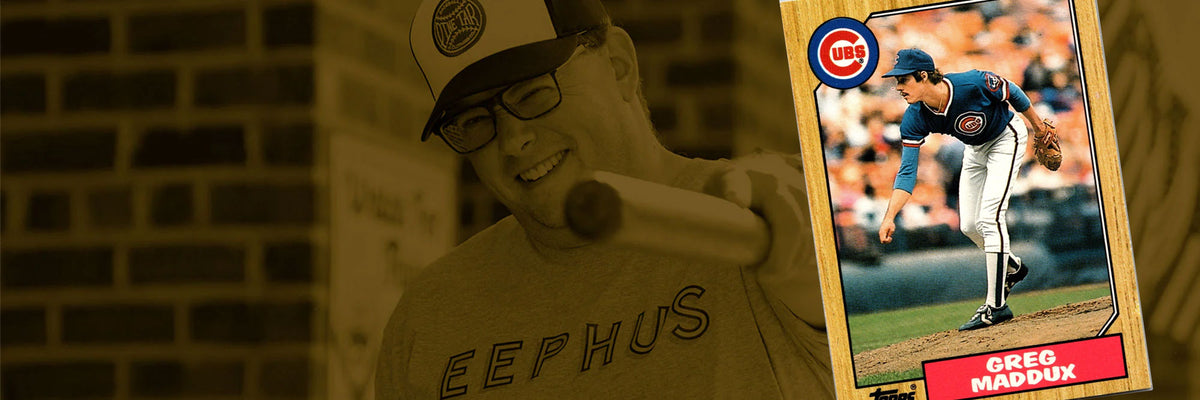
Greg Maddux and the Lost Art of Pitching: Why The Professor Was One of a Kind
Before radar guns became the obsession and triple-digit fastballs became the standard, one pitcher made a Hall of Fame career out of something much simpler: knowing how to pitch.
There was something special about watching baseball in the 1980s and 1990s. Maybe it's nostalgia talking, but the game just felt different. The personalities, the uniforms, the ballparks, and the way the game was played all had a certain character that's hard to describe unless you experienced it.
As someone who grew up playing baseball during those decades, I have a long list of players who helped shape my love for the game. Nolan Ryan was one of them. Tony Gwynn was another. And being a Minnesota kid, I have plenty of memories of Kirby Puckett and the Twins teams that won the World Series in 1987 and 1991.
But there's one pitcher who has always stood out to me.
Greg Maddux.
The Professor. Mad Dog. One of the smartest pitchers ever to step onto a Major League mound.
And arguably one of the last of his kind.
Pitching Wasn't Always About Velocity
Today's baseball game is obsessed with velocity. Pitchers regularly reach the upper 90s, and throwing 100 miles per hour has become something fans almost expect from elite power arms.
Greg Maddux played a different game.
His fastball generally sat in the mid-to-upper 80s, yet he was one of the most dominant pitchers of his generation.
Think about that for a second.
While other pitchers relied on overpowering hitters, Maddux relied on precision, movement, preparation, and an almost unbelievable understanding of the person standing in the batter's box.
He didn't need to throw the ball past you.
He needed to make you think he was going to throw it somewhere else.
And more often than not, he was already two or three pitches ahead of you.
The Art of Painting Corners
If you've ever watched Greg Maddux highlights, you've probably noticed something that seems almost impossible.
The guy rarely missed his spot.
He could paint the inside corner, work the outside edge, change speeds, and make a baseball move in ways that left even the best hitters looking completely lost.
His two-seam fastball and changeup were particularly nasty. The movement, combined with his ability to locate pitches, made hitting against him an exercise in frustration.
There's an old joke about someone painting only the corners of a house, with the caption suggesting Greg Maddux must have been there.
That's how good his command was.
He made a living working the edges of the strike zone, sometimes getting generous calls from umpires who had come to expect that kind of precision.
But there was so much more to his success than simply throwing strikes.
Maddux studied hitters. He understood tendencies. He remembered what worked and what didn't. He would set a hitter up with a particular pitch early in a game, knowing that the same situation might present an entirely different opportunity several innings later.
It was baseball chess.
And Maddux was usually the guy thinking several moves ahead.
Four Straight Cy Young Awards. Let That Sink In.
When you look at Greg Maddux's career numbers, they're almost difficult to comprehend.
Consider a few of his accomplishments:
-
355 career wins
-
Four consecutive National League Cy Young Awards from 1992 through 1995
-
18 Gold Glove Awards
-
A World Series championship with the Atlanta Braves in 1995
-
First-ballot induction into the Baseball Hall of Fame in 2014
During that remarkable four-year Cy Young stretch, Maddux compiled a 75–29 record with a 1.98 ERA.
Those are incredible numbers in any era.
But when you remember that he wasn't regularly throwing in the upper 90s, his accomplishments become even more impressive.
He succeeded because he understood the craft of pitching better than almost anyone else.
And that's what made him so much fun to watch.
Mad Dog Was More Than a Nickname
One of the things I've always appreciated about Maddux is that his quiet, methodical approach on the mound didn't mean he lacked competitiveness.
Quite the opposite.
He was an intense competitor who wasn't afraid to challenge hitters, defend his teammates, or play the game with an edge.
He also had a reputation as a clubhouse prankster, which makes his story even better.
Here's this incredibly calculated, intelligent pitcher who could dissect an opposing lineup with surgical precision, but behind the scenes he also loved joking around with teammates.
That combination of personality and competitiveness is part of what made baseball in that era so memorable.
The players weren't just statistics on a screen. They were characters, competitors, and personalities you connected with.
And Maddux was one of the best.
The Baseball Cards, the Memories, and Why We Collect
I still collect Greg Maddux memorabilia.
One of my favorite pieces is a signed card, and I also have one of his early 1987 Topps cards with that unmistakable woodgrain border.
If you collected baseball cards in the 1980s, you know exactly the one I'm talking about.
For me, collecting has never been just about the potential value of a card.
It's about what that card represents.
A player you admired. A game you remember watching. A particular summer when baseball seemed to be the most important thing in the world.
You see that card, and suddenly you're transported back to another time.
That's a big part of what I love about baseball history.
And it's also a big part of why I started Pine Tar Clothing.
Celebrating the Hustle, Heart, and History of Baseball
When I started Pine Tar Clothing, the idea was to celebrate the hustle and heart of baseball.
The players who give everything they have. The dirt-stained uniforms. The little things that don't always show up in the box score. The love of a game that stays with you long after you've played your last inning.
But lately I've realized there's another important piece of that story.
History.
The history of baseball isn't just about championship teams and record-breaking performances.
It's about the eras, the personalities, the styles, and the traditions that made the game what it is.
It's the stirrups and mustaches of the 1970s. The personalities and swagger of the 1980s. The backwards hats and larger-than-life stars of the 1990s.
And it's pitchers like Greg Maddux, who remind us that there was a time when the art of pitching could be every bit as exciting as a 100-mph fastball.
That nostalgia and history have become an increasingly important part of the inspiration behind our apparel designs.
Not because we want to live in the past, but because there are some things about baseball's past worth celebrating and carrying forward.
Will We Ever See Another Greg Maddux?
Baseball has changed dramatically over the last couple of decades.
The emphasis on velocity, advanced analytics, pitch design, and specialized bullpens has transformed how the game is played.
And while there's a lot to appreciate about today's incredible athletes, I sometimes wonder whether we'll ever see another pitcher quite like Greg Maddux.
Someone who could dominate for two decades with pinpoint control, movement, and an almost supernatural understanding of hitters.
Maybe we will.
But I know I'll always appreciate having watched him pitch.
He was one of a kind.
And for a kid who grew up pitching and loving baseball in the 1980s and 1990s, he was everything that made the game great.
Hustle. Heart. History.
That's baseball.
And that's what we're all about at Pine Tar Clothing.
Listen to the Pine Tar Podcast
In the latest episode of the Pine Tar Podcast, I talk more about Greg Maddux, share a few pieces from my baseball card collection, and reflect on why he's always been one of my favorite players.
Listen to the episode and join the conversation.
Who were your favorite baseball players growing up? Nolan Ryan? Greg Maddux? Tony Gwynn? Kirby Puckett? Someone else entirely?
I'd love to hear your stories. You never know, your favorite player might be the subject of a future episode.
Explore more at Pine Tar Clothing.

Written by Unsalted Seas


Leave a comment
This site is protected by hCaptcha and the hCaptcha Privacy Policy and Terms of Service apply.