

Baseball Cards, Honus Wagner, and Why History Still Matters to the Game
If you love baseball for more than just the box score, you know the game is as much about stories, history, and nostalgia as it is about batting averages. In a recent episode of the Pine Tar Podcast, I went deep on one of my favorite corners of baseball culture: vintage cards, tobacco-era cardboard, and a little piece of cardboard that just sold for over $5 million.
Hustle, Heart, and the History of the Game
At Pine Tar Clothing, we talk a lot about playing with hustle and heart—the kind of effort that leaves your uniform dirty and your legs tired. But loving baseball also means loving where it came from: mid-1800s roots, early 1900s growth, and the way it became “America’s pastime” as the country went through wars and massive change.
That love of history is what pulled me deeper into collecting, and especially into the early era of baseball cards that literally came tucked inside tobacco packs.
From Junk Wax to 120-Year-Old Cardboard
Like a lot of people, I grew up collecting in the 80s and early 90s—the so-called “junk wax” era when companies printed so many cards that most of them will never be worth much. I put the cards away during college when time and money were tight, carried the bin from place to place, and didn’t really revisit it until my kids started dabbling in collecting years later.
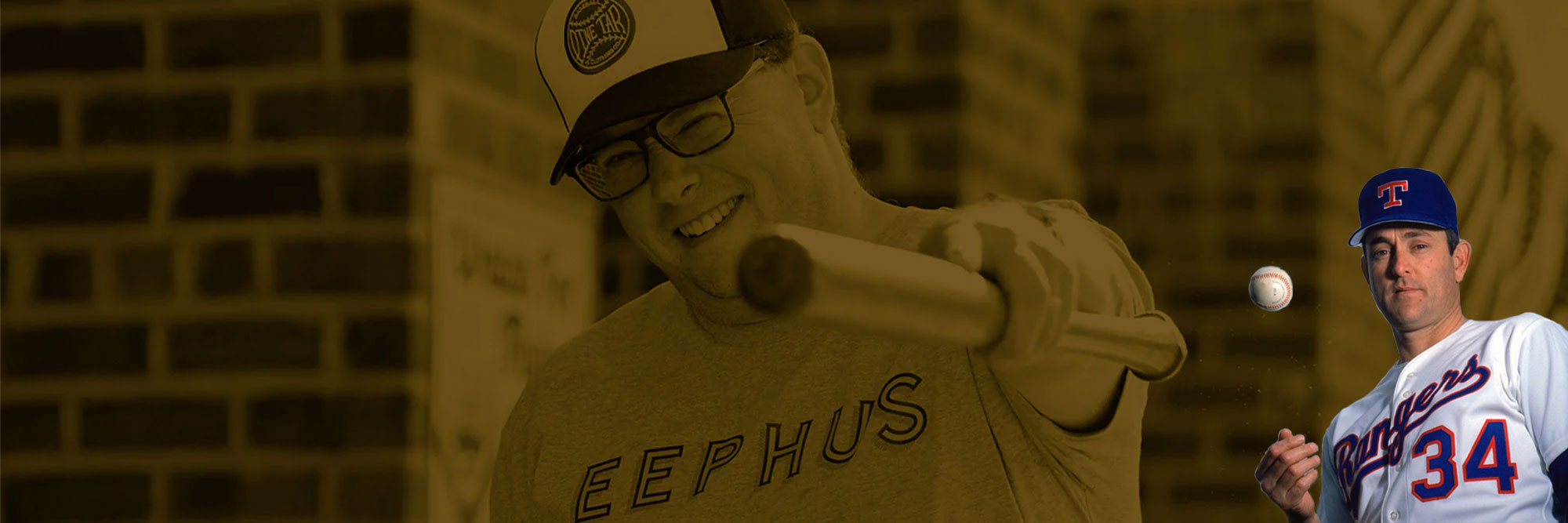
Watching them get into it lit the spark again, but this time I took a different path. I still love my Nolan Ryan and Greg Maddux cards, but I found myself drawn to the really old stuff—the cards that tie directly into the early history of the game.
Tobacco Cards and the T206 Legend
Around 1909–1911, the American Tobacco Company slipped small, beautifully colored lithographic baseball cards into cigaret packs as a way to advertise brands like Piedmont, Sweet Caporal, and Polar Bear. These pieces of cardboard are tiny—roughly three inches tall by about an inch and a half wide—and yet they’ve survived more than 120 years of moves, attics, basements, and who-knows-what conditions.
That run of cards is known today as the T206 set, and even people who don’t collect know its most famous face: Honus Wagner. Only somewhere between roughly 50 and 200 of his cards are believed to have ever made it into packs before his card was pulled, and one of the strongest theories is that he didn’t want kids associating him with cigarets—even though he chewed tobacco himself. Combine low print, early removal, and 120 years of attrition, and you get one of the most coveted items in the hobby.
Just recently, a T206 Honus Wagner with a PSA grade of 1 (poor) sold for about $5.165 million through Goldin Auctions, setting a new benchmark for how much a low-grade card can bring. That’s wild when you consider that no other PSA 1 had ever broken $1 million before, aside from another Honus Wagner.
A One-Family Card and a Massive Sale
One of the coolest parts of this particular Wagner isn’t just the number on the slab—it’s the story behind it. The card came from a family in Los Angeles who inherited their grandfather’s small T206 collection, including the Wagner he originally pulled from a cigaret pack decades ago.
That one-family provenance—being able to trace it from the original owner to today—added to the mystique and helped drive the price. If you want to see the story play out, it’s featured in Season 3, Episode 3 of the Netflix series “King of Collectibles,” which follows Ken Goldin and his auction house.
Why These Old Cards Hit Different
For me, part of the obsession is simply holding something that old and realizing it still exists. These cards are small, fragile, and were never meant to be treated like museum pieces, yet they’ve survived more than a century and now sit in top loaders and one-touches, carefully preserved.
When I look at a T206 today, I can’t help but wonder: Who pulled this out of a tiny cigaret pack in 1909? Did it sit in a drawer for decades? Was it carried in a pocket? How many hands has it passed through before it landed with me via a Facebook group, eBay listing, or a trusted seller my wife jokingly calls my “boyfriend” because of how many cards I’ve bought from him in North Carolina?
Some of My Favorite Early Cards
My own T206 collection is modest—maybe 30 or 40 commons and a few Hall of Famers—but each one tells a story. I like buying them “raw” instead of graded because it makes them a little more affordable and I enjoy the feel of the original cardboard.
A few favorites from the box:
-
Newt Randall – Born in Canada, lived in Duluth, Minnesota, played briefly for Milwaukee, and is buried in Duluth. I’ve hunted down several Minnesota-related T206s, and Randall is a personal favorite because of that hometown connection.
-
Players on bright colored backgrounds – Some of these Piedmont-backed cards have incredible color that still pops even after 100-plus years, with rounded corners and creases that, to me, just add character.
-
Early catchers wearing crude wire masks – The artwork captures that transitional gear era where equipment was evolving but still looked rugged and experimental.
-
A graded PSA 2 Armbruster from Saint Paul – Likely the old Saint Paul Saints, with a bold red background and a Sweet Caporal back that contrasts nicely with the more common Piedmonts.
Beyond T206, I also love related sets like T205, T207, T201, and early caramel issues that candy companies used to promote their own products with ballplayers. Those sets have their own distinct looks and stories, and I’ll be diving into them more in future content.
Collecting for Story, Not Just for Profit
There are plenty of people in the hobby who chase cards purely to flip them, and there’s nothing wrong with that—it’s part of the ecosystem. But my favorite pieces are tied to something deeper: the era, the team, the region, or the player.
Sometimes that means a Hall of Famer, but other times it’s a lesser-known guy from Duluth or Saint Paul whose card connects my love of Minnesota with my love of baseball history. It’s less about having the “best” card and more about feeling that thread from 1909 ballparks to today’s games on your screen.
From Cardboard to Culture
Vintage cards were an early version of what we now think of as baseball culture merch—little bonus items tucked into something you were already buying, like Cracker Jack prizes or toys in cereal boxes. Today, we channel that same love of the game into what we wear, how we decorate our spaces, and what we collect.
At Pine Tar Clothing, that’s the heart of what we’re trying to celebrate: the grit, the dust, the history, and the stories that make baseball more than a pastime. Whether you’re chasing modern rookies, digging into tobacco-era legends, or just pulling on a favorite tee before heading to the ballpark, you’re part of that same continuum.
If you’re collecting—especially vintage or pre-war baseball—I’d love to hear what you’re chasing and why. Drop a comment, tell me your favorite set or story, and let’s keep celebrating the game, one card (and one dirty uniform) at a time.

Written by Jeffrey Ruprecht


Leave a comment
This site is protected by hCaptcha and the hCaptcha Privacy Policy and Terms of Service apply.